
Why does the front desk keep repeating the same answers?
A diagnostic lab has two kinds of work happening at once. Inside, samples are collected, labelled, run, and checked. At the counter and on the phone, people ask whether a report is ready, whether they need to fast, and what time they should come in.
Those three questions are fair. They are also the same questions, asked by a different person every few minutes. Staff answer them between collections, billing, and the patient who is already standing at the desk. After closing time the calls do not stop. Someone wants to know if they can pick up a report on the way home.
An assistant is useful on that repeat layer. It can reply on WhatsApp and on the website from the lab’s own timings, preparation rules, and report status. The people in the lab keep the sample, the result, and any conversation that needs a human.
Which questions can the assistant answer?
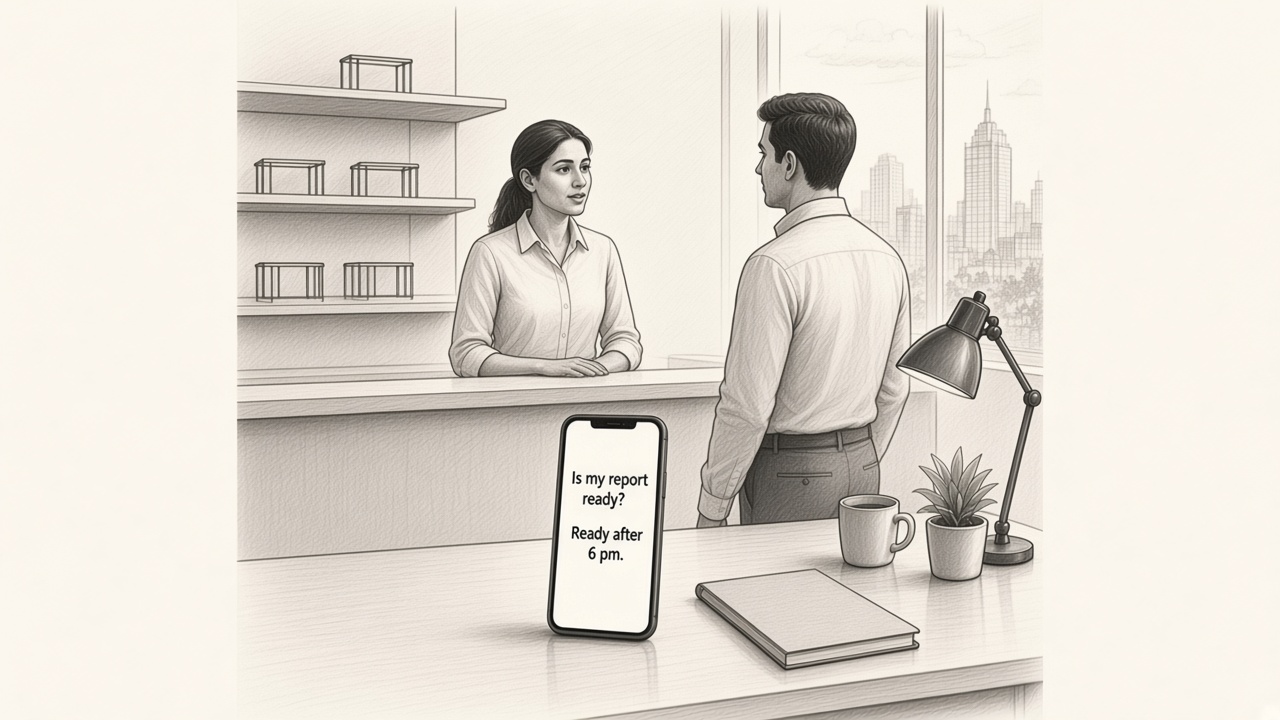
Report status, when the lab’s own system already knows it. “Is my report ready?”, “Can I collect it this evening?”, and “Has the sample reached the lab?” The reply should come from the status on that sample, matched to the phone number or the sample ID the lab already uses. A ready report can say when and where to collect it, or point to the secure link the lab already sends. The assistant should not invent a time.
Preparation rules that the lab has written down. Fasting hours for a lipid profile, whether water is allowed, what to skip the night before, and which tests need a morning sample. If the rule is on the lab’s sheet, the assistant can repeat it in the language the patient typed.
Visit and home-collection times. Centre hours, the last slot for a walk-in, which days a home visit is available, and what the collector needs at the door. A booking can ask for the test name, the area, and a phone number, then hand a confirmed slot back.
That is the whole list to start with. Status, preparation, and timing. Each answer already exists somewhere in the lab. The assistant’s job is to give it without making the counter stop.
Which questions should a person on the lab team still take?
A result that needs an explanation. “Is this serious?”, “Why is this number high?”, and “Should I stop my medicine?” are not status questions. The assistant should say that a person from the lab will look at it, and pass the chat across with the sample ID attached. It should not describe a value as good, bad, or normal.
A report that is late, rejected, or incomplete. If the promised time has passed, the sample was haemolysed, a tube was missing, or one test in a panel is still pending, a person should call. An automatic “still processing” after the real deadline only creates a second angry message.
A complaint, a refund, or a mismatch. Wrong name, wrong test, a charge the patient does not recognise, or a home collection that did not arrive. Those need the desk, with the earlier messages included so the patient does not have to tell the story twice.
The assistant can be polite and fast on the settled answers. The lab team keeps the judgement.
Where should the answer come from?
The status has to be read from the laboratory system the staff already trust. If the assistant guesses from a general chat model, it will tell someone the report is ready when the sample is still in a rack. Connect the reply to the sample. If the match is unclear, ask for the sample ID or the registered phone number, and stop if those do not agree.
Preparation rules and centre timings should come from one sheet that the lab updates. Two branches with two fasting rules will produce two answers unless the assistant knows which centre the patient means. Public web pages are a weak source. Yesterday’s WhatsApp forward is a weak source. The sheet is the source.
A full report does not belong in an open chat. People forward chats. Say that it is ready, say how to collect it, or send the same secure link the lab already uses for reports. Keep the values in the system that already controls who can see them.
LogiQGen builds this as a WhatsApp and website assistant for the questions a front desk repeats. It uses the lab’s status, the lab’s preparation rules, and a handoff a person will actually open. It does not replace the team that runs the test.
What should a lab put in place before switching this on?
One status the assistant is allowed to read. Ready, pending, and the collection time you are willing to promise. If staff keep a second, private update in a notebook, the assistant will be wrong.
One preparation sheet. Fasting, water, medicine notes you are willing to repeat, and the tests that must be booked with a person. Review it once. Then let the assistant use that version.
A handoff with a name on it. A delayed report, a rejected sample, and any question about what a result means should land with the desk or the duty technician, inside the tool they already check. A mailbox nobody opens is a missed call with extra steps.
A short refusal list. No diagnosis. No medicine changes. No comment on whether a value is good or bad. No report details when the phone number does not match the sample. The first week, have one person read a sample of replies and correct the sheet where the assistant was vague.
Most labs can start with report status and centre timings. Add fasting rules after the sheet is clean. Add home-collection booking after the slots on the sheet match the slots the collectors actually run.
Questions labs ask before they try this
Will this tell patients what their results mean? No. It can say whether the report is ready and how to collect it. Meaning, worry, and the next medical step stay with a person.
What if our reports are often late? Then the assistant should tell the truth that is in the system, and hand over when the promised time has passed. A cheerful guess is worse than a short honest wait.
Can patients write in Hindi, Telugu, or a mix? Yes. The reply can follow the language of the message. Test names and sample IDs should stay in the form printed on the bill, so the desk can find the record.
Can one assistant cover two branches? Yes, if each branch has its own hours, slots, and status. A patient who does not say which centre should be asked before any timing is given.
How do we start without stopping tomorrow’s collections? Turn on status and timings first. Leave result questions, complaints, and rejected samples with the team from day one. Widen the assistant only after the handoff is something the desk uses.